Royal Game of Ur
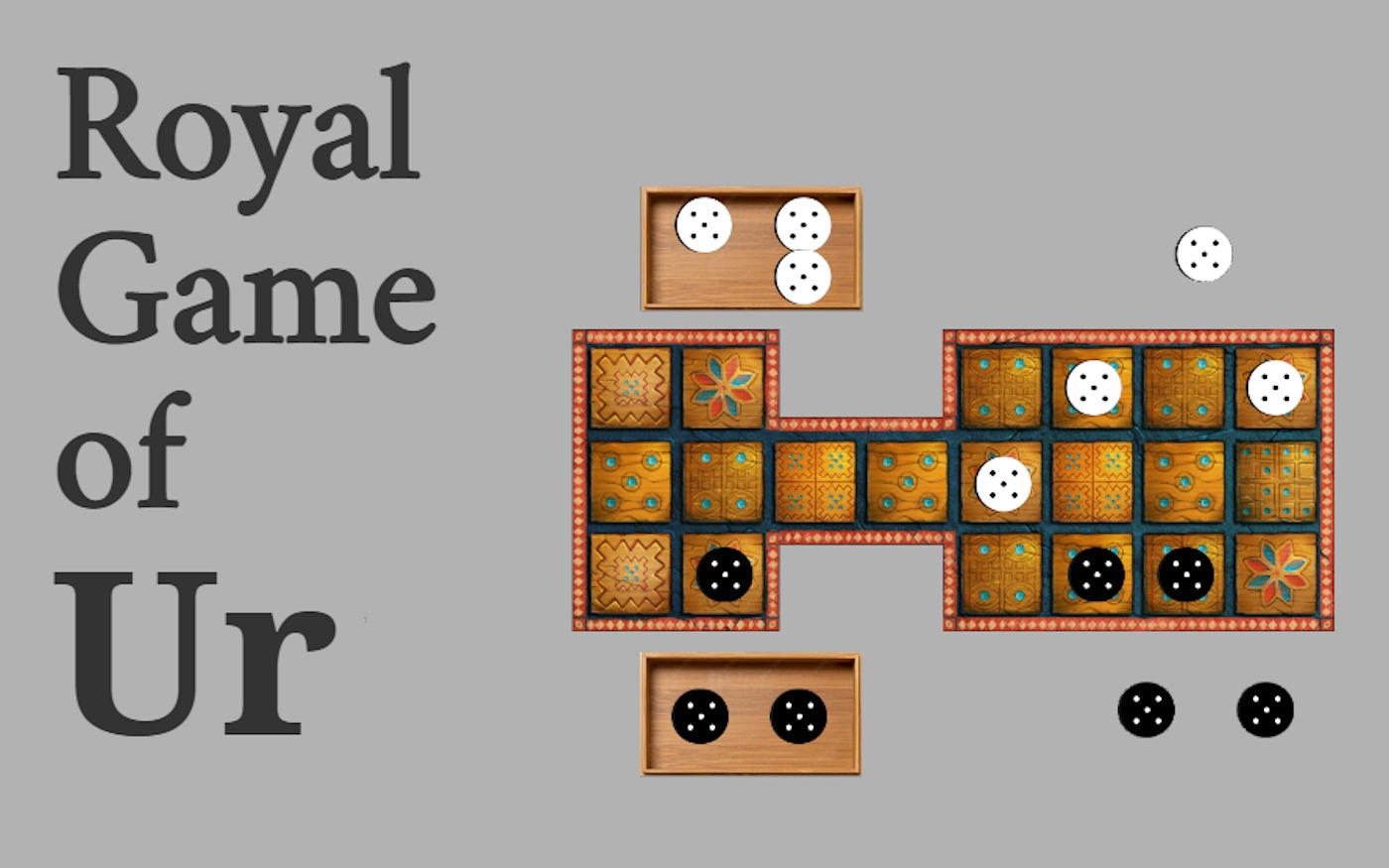
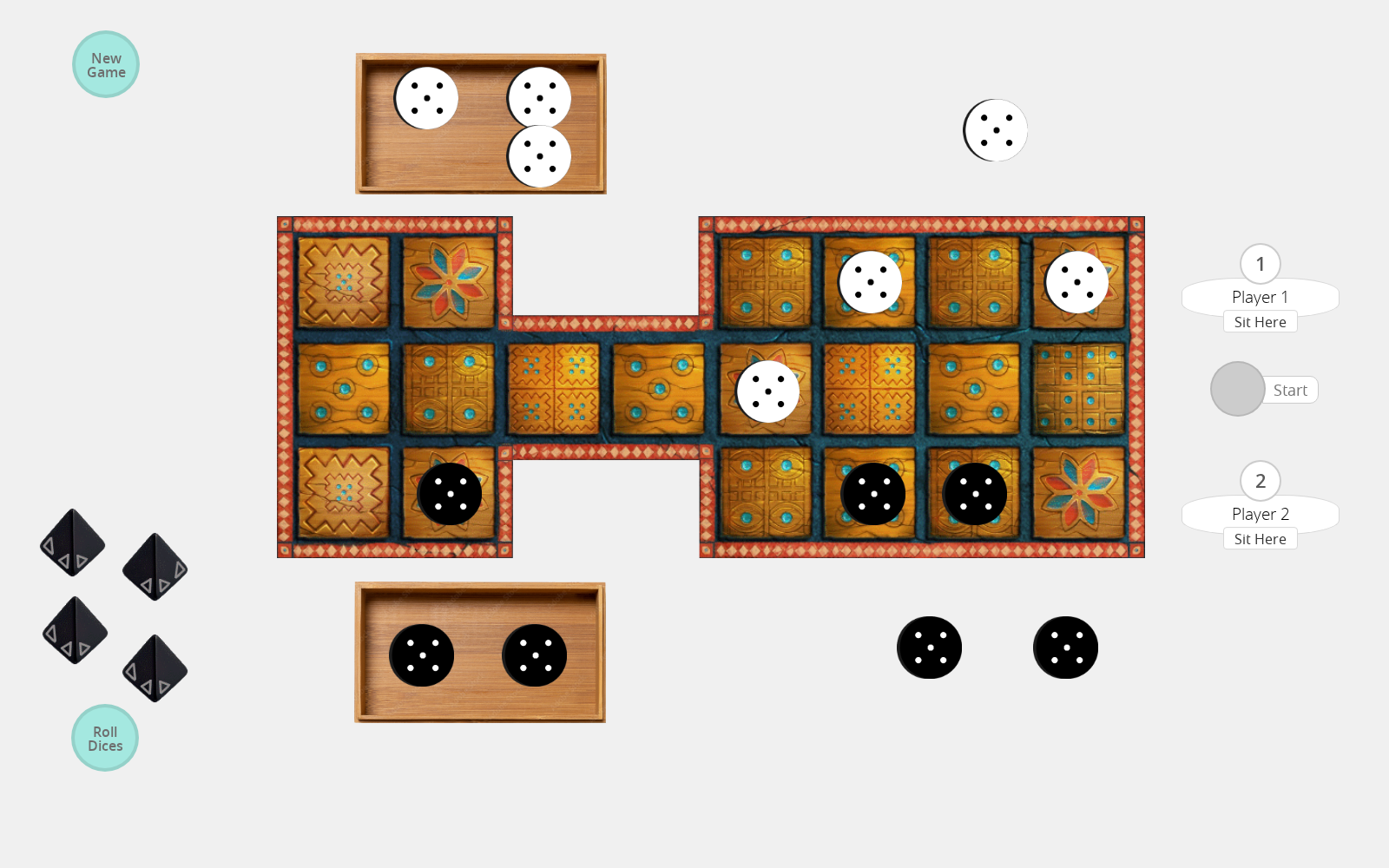
The Royal Game of Ur is a two-player strategy race board game of the tables family that was first played in ancient Mesopotamia during the early third millennium BC. The game was popular across the Middle East among people of all social strata, and boards for playing it have been found at locations as far away from Mesopotamia as Crete and Sri Lanka. One board, held by the British Museum, is dated to c. 2600 – c. 2400 BC, making it one of the oldest game boards in the world.

How to Play Royal Game of Ur
Objective
The goal of the Royal Game of Ur is to move all your pieces from the starting area to the end of the track before your opponent does. Players roll dice to determine movement and can capture opponent’s pieces.
Setup
- The board consists of 20 squares arranged in a specific path.
- Each player has 7 pieces that start the game outside the board.
- Movement is determined by rolling four tetrahedron dices (each with two of the four corneres marked). The number of marked corners facing up equals the number of spaces a piece may move.
- The track has shared and exclusive spaces:
- Six exclusive squares for each player (four at the begining and two at the end).
- Eight shared squares in the middle.
- Special rosette squares that provide saftey and extra turns.
Playing The Game
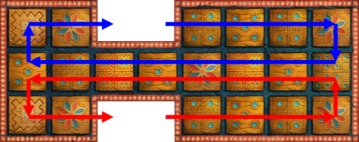
Moving Pieces
- Players roll dice and choose which piece to move based on the result.
- Pieces must follow the path from the start, through shared spaces, and exit off the final square.
- Landing on a rosette square grants an extra turn.
Expelling Opponent's Pieces
- If a piece lands over an opponent's piece in a shared square (except rosettes), the opponent’s piece is expelled off the board and may restart later.
- Rosette squares are safe zones where pieces cannot be expelled.
Winning The Game
- A piece must exit the path exactly on the last move to complete the path.
- The first player to complete the path with all his seven pieces wins.
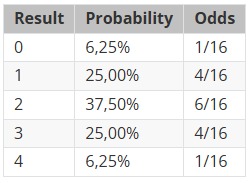
Dice Probabilities
More
There is a wonderfull video in YouTube from Irving Finkel, vs Tom Scott, explaining how to play.
This game was developed using PlayingCards.io virtual tabletop, an online play space where you can play tabletop and card games directly in your browser, multiplayer with your friends.
PlayingCards.io makes it easy to create, share, and play games.